
Sources for Fountain Hills Previous Residents
Every era of a Fountain Hills address calls for a different record. Modern ownership starts with the county assessor and Recorder. Town permits can date work after local development, while older planning may remain at county level. Regional directories and the released federal census can identify a household, but only where the place and year are covered. Newspapers, probate, and vital archives may explain the last transfer tied to an estate.
| Source | Years It Covers | Where Held | What It Shows |
|---|---|---|---|
| Recorder index and images | Modern instruments online; older book and page searchable, with no official first year stated | Maricopa County Recorder online and counter | Title chain, parties, dates, and land description |
| Assessor parcel roll | Current roll with limited linked history | Maricopa County Assessor | Owner, APN, deed, situs, and improvement data |
| Town permits and files | Mainly post-development; no verified online cutoff | Fountain Hills Town Clerk and Development Services | Construction, applicant, contractor, and inspection dates |
| Regional directories | Statewide corpus from 1881 to 1989; local inclusion must be checked | Arizona Memory Project and State Research Library | Named occupants where an edition covers the address |
| Federal census | Decennial schedules through 1950 are public | National Archives and partner access | Household members at the census date |
| Arizona newspapers | Digital corpus represents 1859 to 1989 | Arizona Memory Project and Reading Room | Sales, notices, deaths, and community links |
| Sanborn maps | No Fountain Hills sheet or year was verified | State Research Library | Building footprint and use only where mapped |
Start with the newest known fact. A current parcel can supply a deed number and stable legal description. A known family name from a directory or census can instead become a Recorder party search. Always label a gap honestly. No official standalone Fountain Hills historical directory run, house-history guide, Sanborn year, or street-renumbering schedule was verified.
Start Fountain Hills Address History
The Maricopa County Assessor Property Search is the best first stop for a past-resident search because its parcel record commonly links the current owner to a deed number. Record the APN, situs address, owner and mailing address, deed date and number, subdivision or MCR, legal description, lot size, use code, and improvement data. The build year can help date the structure, but it does not prove that the same building or family remained there.
Compare the situs address with the owner mailing address. A match is some evidence that an owner may receive mail at the property. It is not proof of all occupants. A mismatch can reflect a seasonal owner, trust, estate, business, or another tax-mail destination. The most useful bridge is usually the legal description because it stays tied to the land after an APN split, parcel combination, or change in street labeling.
If the current APN does not lead backward, ask the Assessor for a parcel-history report. Preserve each old parcel number. The modern parcel route is also explained from the current street angle in the Fountain Hills street directory, while the work here continues into earlier ownership and occupancy.
Fountain Hills Ownership in Numbers
Census QuickFacts for Fountain Hills estimates 11,031 households and 13,177 residential units for 2020 through 2024. The owner-occupied rate is 84.4 percent. That high share makes assessor and deed evidence especially productive for local house history, though it still leaves non-owner occupants and unnamed household members outside the ownership roll.
Residents age 65 or older account for 40.7 percent of the population estimate. Estate deeds, trusts, probate, obituaries, and archival vital records are therefore relevant local trails, but the statistics describe Fountain Hills as a whole. They must never be used to infer a fact about one address or person.
Trace Previous Residents Through Deeds
The Maricopa County Recorded Document Search supports recording number, older docket or book and page, person or business name, document code, map location, and date range. Its full-text Research option covers only the latest two years. That newer address and legal-description search supplements the structured index; it does not replace older party and book searches.
- Open the current deed number linked from the assessor parcel. Record its recording date, parties, document title, and legal description.
- Identify the grantor, meaning the party transferring an interest. Do not assume every named party lived at the address.
- Search that seller as a grantee, the receiving party, in an earlier period. Use initials, former names, and business or trust forms when needed.
- Compare the legal description and subdivision details. Then repeat from the earlier deed.
- When online search stops working, request old docket, book, or page material from the Recorder counter at 301 W Jefferson Street, Suite 200 in Phoenix.
The counter is open Monday through Friday, 8 a.m. to 5 p.m., and the Recorder can be reached at 602-506-3535. Online unofficial images aid research. Official copies are $1 per page, with $3 added for each certified document. A deed sequence can include trust transfers, estate distributions, corrective deeds, or community-property changes without any move, so it is a chain of title rather than a household list.
- Grantor and grantee
- The party giving an interest and the party receiving it in a recorded instrument.
- Chain of title
- The linked sequence of recorded transfers affecting the same land.
- Legal description
- The parcel's formal land identity, often a subdivision, lot, block, MCR reference, or metes-and-bounds description.
- Recording date
- The date the Recorder accepted the instrument, which can differ from the date the parties signed it.
Note: A deed of trust is a security instrument, not the same event as a deed that conveys ownership.
Fountain Hills Before Street Addresses
Fountain Hills began as a planned development and incorporated on December 5, 1989. This late municipal start is the central house-history challenge. Before the modern address existed, land may appear only by subdivision plat, lot and block, township-range-section, or a longer legal description. Pre-incorporation planning and permit evidence may also belong to Maricopa County rather than the Town.
Build a change log with each street spelling, directional prefix, subdivision name, APN, old APN, lot, block, MCR, and jurisdiction. Developments such as Eagle Mountain, Firerock, SunRidge Canyon, Lakeside Village, Bainbridge, and Golden Eagle can be stronger catalog and map terms than a broad Fountain Hills query. The town boundary and postal wording can change on different tracks.
The record trail may therefore move through three eras: a modern town address, planned-development and county plat records, then unsubdivided land described by survey grid or metes and bounds. That handoff is the authentic Fountain Hills records story. It is more accurate than forcing a current house number into an older source that never used it.
Match Fountain Hills Residents to Census
Owners are only one part of an address history. A city directory can name an occupant in a particular edition, and a released census schedule can show a household on one census date. The National Archives census research guide explains access to federal schedules and the 72-year release rule.
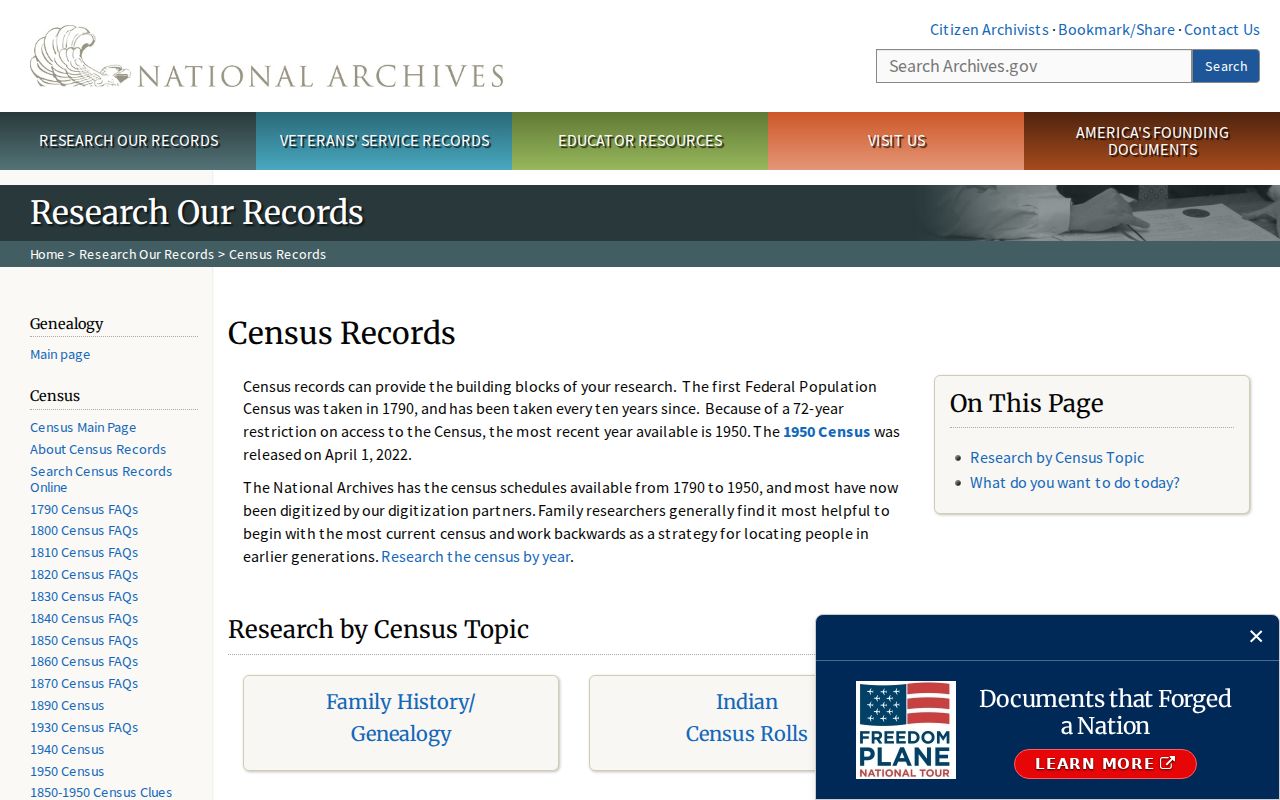
The captured National Archives resource is most useful after a household name, place, and likely date have been established. The 1950 census is the latest released schedule in the research. Fountain Hills did not exist as an incorporated town in the early censuses, so use enumeration geography, nearby communities, county context, and the future parcel's land description.
- Find a relevant regional directory edition and verify that it actually covers the place or subdivision.
- Copy the printed entry, directory year, page, address, and household notation. Check surname variants and OCR errors.
- Repeat in nearby editions to estimate an interval, treating a missing year as a gap rather than proof of departure.
- Pair that interval with a released census year and search the matching geography and name variants.
- Compare the household evidence with the deed owner and permit dates, keeping occupant and owner roles separate.
A criss-cross directory is organized by street and house number instead of surname. No verified Fountain Hills-specific reverse-directory shelf was found. Search the regional holdings carefully, then fall back to deeds, newspapers, and the State Research Library rather than claiming a directory match that is not there. The collection details belong on the Fountain Hills city directory page.
Close Fountain Hills Trails Through Probate
A deed into or out of an estate or trust may signal the end of one ownership interval. Search a former owner in newspapers and then use the Maricopa County Superior Court Clerk for probate. The statewide Public Access portal excludes probate, so no result there does not mean no file exists. A clerk request based on decedent name and an approximate death or filing date may locate petitions, representative appointments, notices, inventories, or distributions, subject to sealing and redaction.
Arizona's archival clock also matters. A.R.S. §36-351 transfers birth certificates to the State Archives 75 years after birth and death certificates 50 years after death.
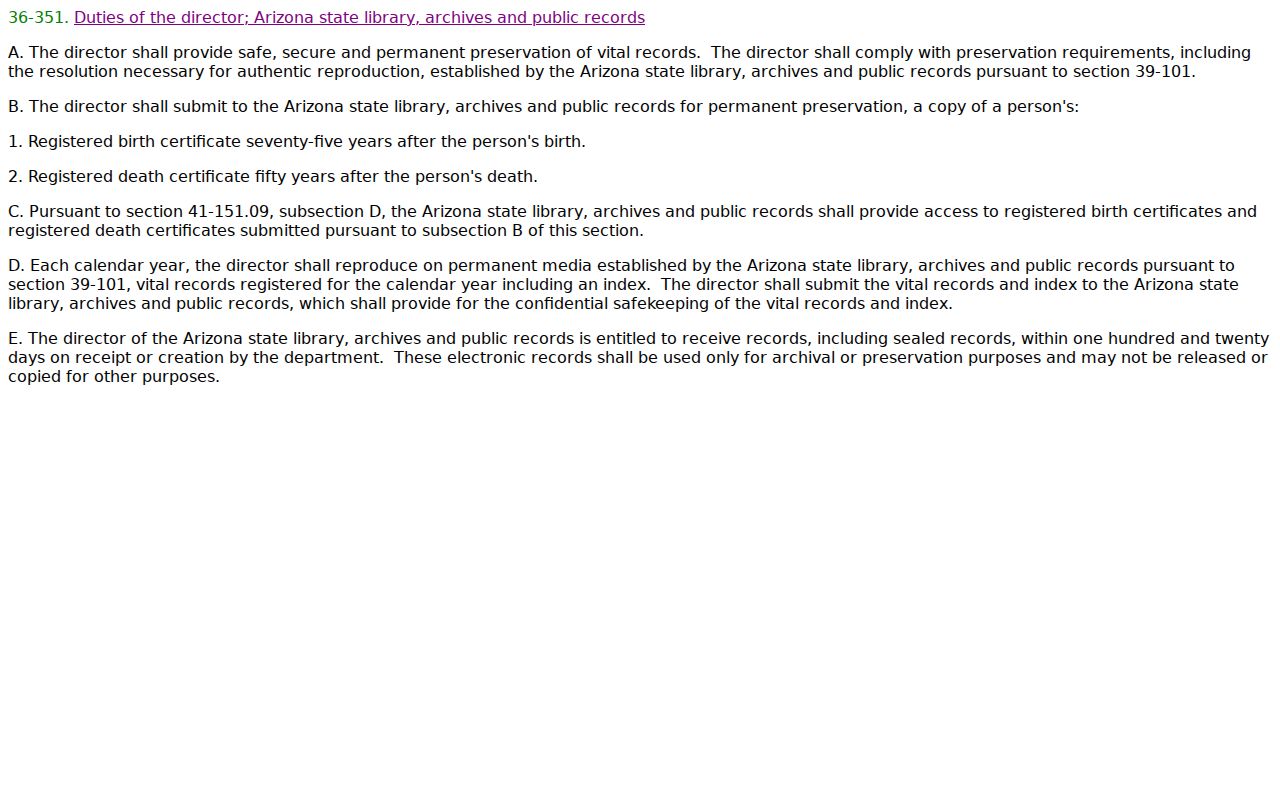
The statute captured above provides a lawful genealogy bridge for older people. Newer certified birth and death records remain eligibility-based and require proof. An obituary can supply relationships and later whereabouts, while probate can establish legal roles. Neither should be treated as a full list of everyone who shared the house.
Follow Past Residents After a Move
A former owner may disappear from the Fountain Hills deed chain after selling. Later deeds, probate, obituaries, and business records can supply the next dated lead. Arizona Unclaimed Property also offers a legitimate name and locality search.
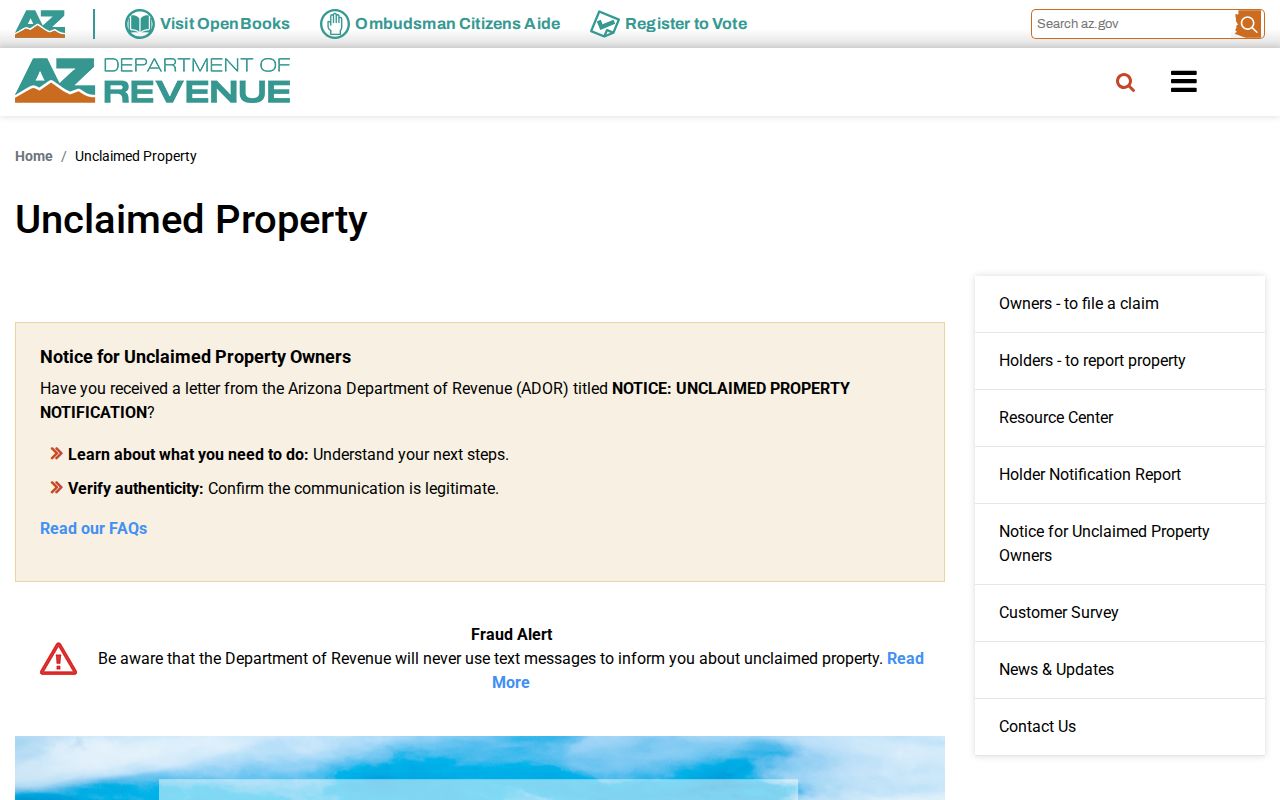
The captured state search can show that a holder reported property under a name. It does not prove a current address or that two people with the same name are identical. A claimant must provide identity and ownership evidence. Use the match as a dated clue, then confirm it with a unique parcel, deed, case, license, or probate identifier.
For an heir search, begin with the estate deed or probate file, identify the personal representative and public notices, then test relationships in obituaries and archival vital records. Cemetery information can add memorial evidence. Triangulation matters because each source records a different event and may omit addresses.
Request Fountain Hills House Records
Town permits can date construction, additions, inspections, and certificates of occupancy. They may name an applicant, owner, contractor, or contact at the project date. They do not date every move. Since no stable Fountain Hills public permit-search inventory was verified, submit the exact address, APN, record type, and date range through the Town Clerk request portal. The Town Clerk holds municipal planning, code, council, and administrative material.
Arizona law now asks public-record requesters to affirm a noncommercial purpose or explain a commercial one. A.R.S. §39-121.03 addresses commercial-purpose statements, fees, and misuse consequences.
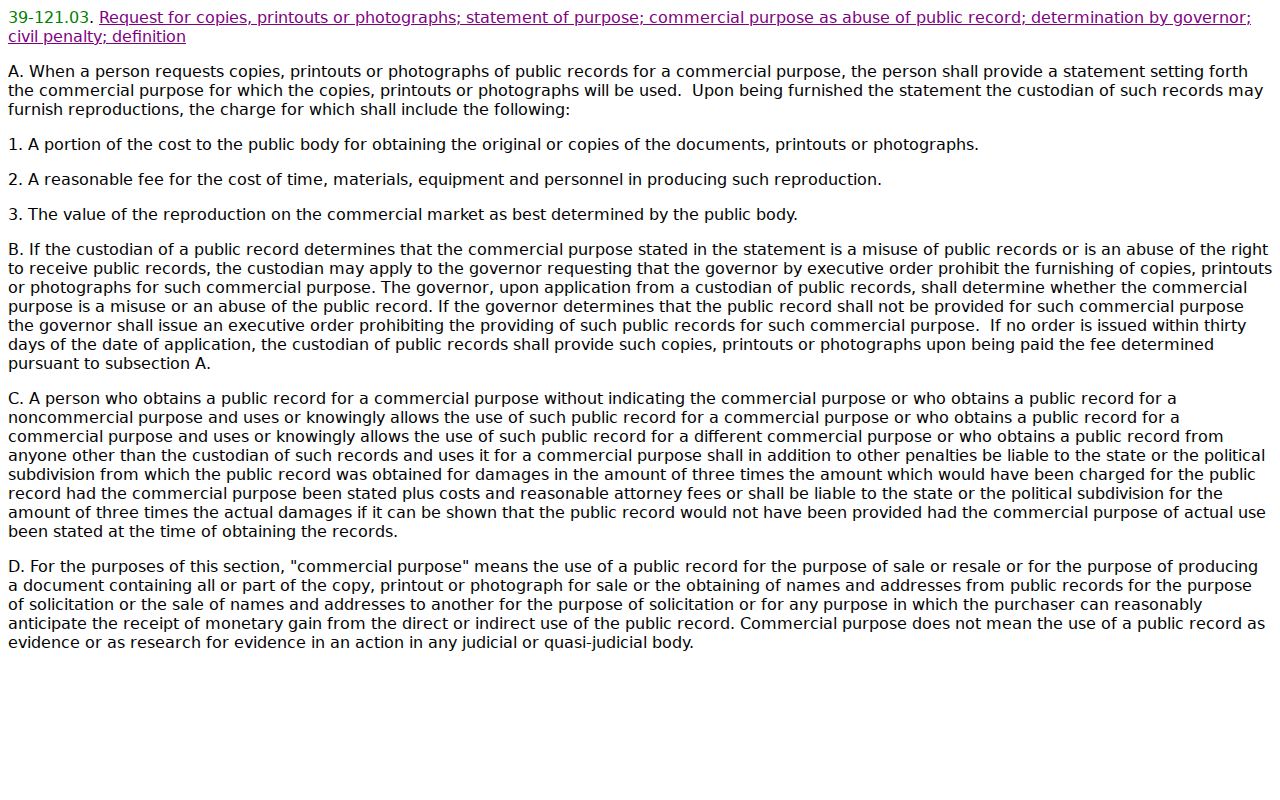
The captured statute is a reminder to state the purpose accurately. Arizona uses a prompt production standard, not one fixed response period for all records. Ask whether inspection is possible and name the desired format. Older county planning, assessment, or permit files may require a separate county request when the research crosses the 1989 jurisdictional handoff.
Note: A focused request for one series and period is more workable than a demand for every record about a former owner.
Limits on Fountain Hills Previous Residents
A backward address search must preserve uncertainty. A named deed owner may never have occupied the property. A trust transfer may not reflect a move. A permit applicant may be a contractor. A directory entry can be absent because the edition skipped the area, the resident was seasonal, the address was new, or OCR missed the name. Census evidence applies to one date, and a voter record applies only to its effective date and lawful scope.
Public records also omit protected information. Arizona's Address Confidentiality Program supplies substitute addresses to qualifying survivors, and protected voters are excluded from public files. Living non-owner occupants and household members may leave no public address-keyed record at all. Do not fill those gaps with guesses or publish needless personal detail.
Lawful use. Research previous residents for family history, estate work, or the history of a Fountain Hills house. Never use an address trail to stalk, harass, threaten, or track a living person.
A sound conclusion names the relationship and date: owner of record, directory occupant, permit applicant, voter registrant, or census household member. Those labels may overlap, but they are not synonyms. When the evidence stops, record the last verified fact and the missing interval rather than turning a clue into certainty.